In this article from the New York Times, it is basically saying that because of today's economy, studies in humanities is seen as impractical because it concentrates on personal development, intellectualism, and forward-thinking. It doesn't prepare one for an actual job, like say engineering or medicine would.
At the end, the article says that humanities studies will soon be like it once was at the beginning of the 20th century: something only the wealthy priveleged will study.
This article is horrendously bleak. True: humanities studies do not prepare an individual specifically for an actual job in our society--a capitalist-based society where production and profit are valued. True: humanities is art--which never equals money in the pocket. True: humanities studies has no guarantees.
I call bullshit on the conclusion of the article: that only the wealthy priveleged will be the ones studying humanities. First of all, because of the huge surge in the middle class, and the blurring of the class divisions, we have, in America, rags-to-riches stories. Anyone can work from the bottom to the top if they so desire. Someone who has a degree in humanities, if they push themselves hard enough can become successful. It's the individual's responsibility to align themselves with success--if they so desire. Maybe some humanities students wouldn't mind living in a tool shed, surrounded by their philosophies, candles, and a crusty loaf of bread, so long as they have their books. You can't speak for every individual.
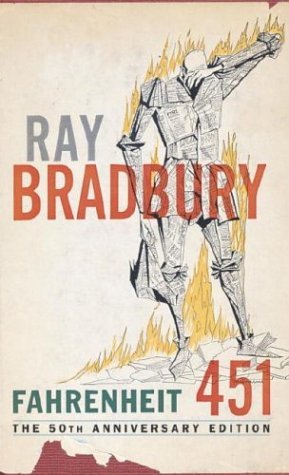
Secondly, even if (and this article smacks of dystopia for me) the humanities and liberal arts education were abolished and kept only for the rich--what kind of world do you envision? Something like in the film, Metropolis--workers, workers, and more workers? Orwellian dystopia? Ray Bradbury's Fahrenheit 451 where books are burned? No creativity? No imagination? Stifled words. Our current president is an individualist, free-thinking, forward-thinking man.
I am simply saying that the outcome of humanities studies will not just be for the wealthy. It's not entirely impractical, but you will learn more about yourself and you will craft an identity through your knowledge. Everyone is a humanist at heart, anyhow. We are not unfeeling robots. I do not fear the death of humanities.
In the finale of the film, Gone With The Wind, the forlorn protagonist, Scarlett O’Hara comes to an ultimate realization. Everything that she has worked for, the strife and hardship means almost nothing when she loses the true love of her life, Rhett Butler. The final scene is one of the most groundbreaking and memorable endings. It is also has its place in controversy. Rhett utters the line, “Frankly my dear, I don’t give a damn,” which had censors in the 1930’s wringing their hands in protest. Such things were not said before a Depression-era crowd, for it was considered offensive and vulgar. The studio that produced Gone With The Wind had to pay a fine to keep the line in the film. Not only does this scene depict Scarlett’s determination and exceptionalism, it also represent the ultimate defiance in the societal standards of its day.
(I can expand on this, but I could honestly talk about GWTW all day. I'm sure you don't want to hear my drivel...)
As technology and the means of production increase and evolve, modern society now has greater access to everything. From pornography to exclusive art galleries, grape juice to vintage wine and everything in between is available at our disposal. Directly due to the advancement in quicker communication and discoveries in scientific research, mass production enables us to have all the commodities we need. Does all this easy access come at a price? In exploring the novel, Fahrenheit 451, by Ray Bradbury, it is apparent that having things quickly and easily affect the way people feel, act, and think.
We will begin by addressing the premise of Bradbury’s story. The protagonist, Guy Montag, is a firefighter, whose job is to burn all the books that he and his fellow firefighters find (58). This is what firefighters do in the world of Fahrenheit 451. They are not the heroes people usually associate them as, but as mediators of the so-called peace and sanctity of the culture. Montag then meets people that change his mind about the life he’s living and the world around him. He starts questioning everything. He is having a personal quest to find the truth. It is interesting that he finds dissatisfaction with his life. Chief Beatty is Montag’s superior at the fire station, and he says bluntly:
People want to be happy, isn’t that right? Haven’t you heard it all your life? I want to be happy, people say. Well, aren’t they? Don’t we keep them moving, don’t we give them fun? That’s all we live for, isn’t it? For pleasure, for titillation? And you must admit our culture provides plenty of these. (59)
Essentially, Beatty means that the firemen’s job is mass production. Burn the books, abolish philosophy, complicated thought, and reason because it doesn’t make people happy. If one person knows more than the other, they are not on equal playing ground, which is discouraging for the lesser.
Mass production, in this case loosely defined as making something rapidly and efficiently for all to consume. Philosopher Theodor Adorno, comments about mass production in relation to art: “The stunting of the mass-media consumer’s powers of imagination and spontaneity does not have to be traced back to any psychological mechanisms; he must ascribe the loss of those attributes to the objective nature of the products themselves.” If we are given poor quality entertainment or taught with a lack of substance or intelligence, then our imagination and creativity suffer. In Fahrenheit 451, the mass production of happiness and equality tries to permeate in all aspects of life. People now want instant gratification. This comes in the form of abbreviated television shows, movies, known as “parlor” television or family (Bradbury 82) and pills for sleeping, waking up, and every ailment in between (Bradbury 43).
There is a memorable scene in the film version of Fahrenheit 451 where Montag’s wife, Linda (Mildred in the novel), overdoses on her pills. Montag is distressed and tries to call for emergency help. The emergency line answers nonchalantly, asking him what color the pills are. They come in simple colors like white, blue, and yellow. Then two technicians come to Montag’s house and pump her blood with a machine, which will revive her and they simply shrug it off as routine procedure. What is interesting is how simple the pills are—basic colors—and a doctor does not come to check on Linda. The technology is simultaneously advanced and primitive. Everything is done at a fast pace. Interestingly, why does Linda feel compelled to take so many pills if everyone’s lives are meant to be happy? This is far from a picture of happiness.
Book-burning is the cornerstone of Bradbury’s novel. To burn books is to burn thought, ideas, imagination, creativity, inequality, and suppress revolution. Beatty says that books encourage inequality because, “Bigger the population, the more minorities. Don’t step on the toes of the dog lovers, the cat lovers, doctors, lawyers, merchants, chiefs, Mormons, Baptists, Unitarians, second-generation Chinese, Swedes, Italians, Germans, Texans, Brooklynites Irishmen, people from Oregon or Mexico” (Bradbury 57). This is all in hope that equality will mean contentment for all. However, the scene where Montag and the firemen burn a woman with her books is an example of how much they affect people. She is so attached to her books; she is willing to die with them. She strikes the match herself and the entire house ignites around her. (Bradbury 36-40) The old woman finds her happiness, not in the parlor television screens, or in simple entertainment, but from her books. She rejects her own society. This is echoed here: “The culture industry did away with yesterday’s rubbish by its own perfection, and by forbidding and domesticating the amateurish, although it constantly allows gross blunders without which the standard of the exalted style cannot be perceived” (Adorno & Horkheimer). Therefore mass production borrows from its former elements and churns out low-quality results for all to consume. This explains the old woman’s attachment to her books, her need for something deeper and meaningful, and Montag’s disillusionment with society.
Today, mass production is meant to deliver the things used every day to people in the fastest way possible. The assembly line and the quick communication are optimal for saving time and money. However, it is apparent that mass production of happiness or art, things that are abstract or ambiguous suffer from the exchange. Ray Bradbury’s novel, Fahrenheit 451, gives a glimpse into a society where everything is instant and devoid of thought and imagination. The philosophies of this world have good intentions: to create equality for all. However, equality does not automatically translate to happiness or satisfaction. Rather, the people are vapid, find nothing meaningful, and in the case of Montag, are on a search for fulfillment but never seems satisfied. One cannot produce results or happiness with the flick of a switch or by popping a pill. It comes from within—from a functioning mind.
WORKS CITED
Adorno, Theodor and Horkheimer, Max. “The Culture Industry: Enlightenment as Mass Deception.” Dialectic of Enlightenment, 1944. CSUN WebCT.
Bradbury, Ray. Fahrenheit 451. New York: Ballantine, 1953.
Fahrenheit 451. Dir. François Truffaut. Perfs. Julie Christie, Oskar Werner, Cyril Cusack. Universal Pictures, 1966.
(Pictures come courtesy of googling images).
Also...Prof. Wexler, I'm sure you know, but just in case, anything written for your class has the label, "english 312" on it. You can just click on the label and it will all be on one page for you.
It's acronym is UDWPE. This exam is a test where you write an essay because some omnipotent overlord has mandated a certain standard of writing. This test shall determine if you have adequate writing skills before you can be sent off into the real world. I have actually heard stories of students that fail the exam. Sometimes students fail the exam multiple times. On the flip side, I have had people tell me, "Oh, it's such an easy test!" and "You're an English major. It'll be nothing for you!"
Will it really be nothing? It is writing, something that I might have a little bit of experience with...but it's still a test. I am not a fabulous test taker. I actually passed my driver's permit test the first time, with almost a perfect score. Well, I missed five questions, and that's not near perfect, but I still passed on my first try. The driver's exam behind the wheel is another story. I failed the exam twice before the third time was the charm. I took the notary public exam twice and failed them both and decided to not retake the test because who would trust a notary public who knows nothing? I wasted about $80, (that included class fee + two tests) and felt very ashamed. Even when I took my Catholic high school entrance exam, I didn't even finish the test, but somehow I was still accepted to high school. Yeah, I'm a very uneven and inconsistent test taker and the times that I do pass, it's down to some kind of luck or a guardian angel ushering me the right way.
Essentially, I'm nervous. I need to pass the UDWPE in order to graduate, and I would rather not take the exam multiple times and shell out $20 per exam. Ridiculous.