I pretty much stuck to the schedule (from "Persevere, Clare") but there was one hitch in the entire ordeal and that was that my car broke down. On Tuesday night, I was driving home from CSUN and somewhere in Sun Valley (an area I'm not familiar with, and very shady-looking), the smell of something funky began surrounding me. I wondered if it was my car, but deep down, I knew it was my car.
I had made it home, at least the exit of the freeway near my place, and that's when the car shut down. It shut down like a Windows platform. I was burning pure oil in that car.
The combination of the terrible triangle of a commute, the hot weather, and the fact that that car has been giving me problems since the beginning of time caused the, quite literal, burnout. I wasn't even in a foul mood when it happened. I was just tired. I wanted to sleep. Thank goodness for weekends, though, as they give one the time to recuperate. Although, this weekend started off just as stressful, what with Jen Ni and Mi Ra Flo leaving (that's Jenny and Myra, lol) and Saturday being an overall bad day. I won't go into that.
Oh yeah, didja hear about the fires? There are evacuations going on right now in the Glendale-Tujunga-La Crescenta-Pasadena area, because of the brush fire in the Angeles Crest that firefighters are having difficulty containing. It's very serious.
I remember a year ago when I posted some diddies about the fires in the valley. Man, it happens every year. Oddly enough, even though I'm close by these fires, I haven't smelled much smoke or ash. The overall heat doesn't help much, either.
Through the smoke in the early morning, the sun is a tiny red dot worshiped by the smoke clouds. It is something awe-inspiring but only occurs in times of disaster. The red sun is altogether beautiful and ugly, frightening and gorgeous, a symbol of how relentless and unforgiving nature can be, but so utterly pure that one cannot help but be stunned by the rare treasure in the sky.
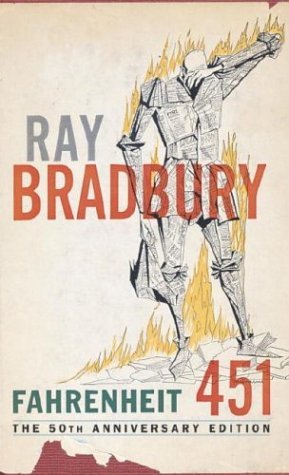
As technology and the means of production increase and evolve, modern society now has greater access to everything. From pornography to exclusive art galleries, grape juice to vintage wine and everything in between is available at our disposal. Directly due to the advancement in quicker communication and discoveries in scientific research, mass production enables us to have all the commodities we need. Does all this easy access come at a price? In exploring the novel, Fahrenheit 451, by Ray Bradbury, and other texts and films, it is apparent that having things quickly and easily affect the way people feel, act, and think.
First, how and when did the western world become so heavily based on the assembly line process and mass production? Henry Ford revolutionized this means of production for his line of automobiles in the early twentieth century (Batchelor). Ever since then, we have utilized this in America to produce the majority of our goods. Nowadays, we outsource many of the factory jobs to other countries. Generally, this cheap means of labor means that we, as consumers, pay less and are happy with a bargain. However, on the other side, the worker suffers. Unfair wages or long work days contribute to a worker’s overall dissatisfaction. An early example of this would be the Triangle Shirtwaist Factory incident, where the working women were locked in the building, and a large majority died tragically.
A stunning example in film of the effect that this type of labor has on people is seen in Fritz Lang’s masterpiece, Metropolis. In a clip from the film, we see the workers carrying on with their jobs—making repetitive movements and are almost robotic. Perhaps what Lang is trying to criticize here is the near-tyranny of capitalism and how greed can affect the average person. Also in this clip, the robotic and unchanging movements serve to show how this type of environment and lifestyle can deplete a sense of self, or a sense of humanity. These people have become shells; just human bodies that simply function.
In Bradbury’s Fahrenheit 451, we see exactly this—people are shallow shells that function only on a surface level. They have no substance, no drive, no ambition, no yearning. Intellectual pursuits are forbidden, even. The protagonist, Guy Montag, is a firefighter, whose job is to burn all the books that he and his fellow firefighters find (58). This is what firefighters do in the world of Fahrenheit 451. They are not the heroes people usually associate them as, but as mediators of the so-called peace and sanctity of the culture. Montag then meets people that change his mind about the life he’s living and the world around him. He starts questioning everything. He is having a personal quest to find the truth. It is interesting that he finds dissatisfaction with his life. Chief Beatty is Montag’s superior at the fire station, and he says bluntly:
People want to be happy, isn’t that right? Haven’t you heard it all your life? I want to be happy, people say. Well, aren’t they? Don’t we keep them moving, don’t we give them fun? That’s all we live for, isn’t it? For pleasure, for titillation? And you must admit our culture provides plenty of these. (59)
Essentially, Beatty means that the fireman’s job is mass production. Burn the books, abolish philosophy, complicated thought, and reason because it doesn’t make people happy. If one person knows more than the other, they are not on equal playing ground, which is discouraging for the lesser.
Mass production, in this case loosely defined as making something rapidly and efficiently for all to consume. Philosopher Theodor Adorno, comments about mass production in relation to art: “The stunting of the mass-media consumer’s powers of imagination and spontaneity does not have to be traced back to any psychological mechanisms; he must ascribe the loss of those attributes to the objective nature of the products themselves.” If we are given poor quality entertainment or taught with a lack of substance or intelligence, then our imagination and creativity suffer. In Fahrenheit 451, the mass production of happiness and equality tries to permeate in all aspects of life. People now want instant gratification. This comes in the form of abbreviated television shows, movies, known as “parlor” television or family (Bradbury 82) and pills for sleeping, waking up, and every ailment in between (Bradbury 43).
There is a memorable scene in the film version of Fahrenheit 451 where Montag’s wife, Linda (Mildred in the novel), overdoses on her pills. Montag is distressed and tries to call for emergency help. The emergency line answers nonchalantly, asking him what color the pills are. They come in simple colors like white, blue, and yellow. Then two technicians come to Montag’s house and pump her blood with a machine, which will revive her and they simply shrug it off as routine procedure. What is interesting is how simple the pills are—basic colors—and a doctor does not come to check on Linda. The technology is simultaneously advanced and primitive. Everything is done at a fast pace. Interestingly, why does Linda feel compelled to take so many pills if everyone’s lives are meant to be happy? This is far from a picture of happiness.
Book-burning is the cornerstone of Bradbury’s novel. To burn books is to burn thought, ideas, imagination, creativity, inequality, and suppress revolution. Beatty says that books encourage inequality because, “Bigger the population, the more minorities. Don’t step on the toes of the dog lovers, the cat lovers, doctors, lawyers, merchants, chiefs, Mormons, Baptists, Unitarians, second-generation Chinese, Swedes, Italians, Germans, Texans, Brooklynites Irishmen, people from Oregon or Mexico” (Bradbury 57). This is all in hope that equality will mean contentment for all. However, the scene where Montag and the firemen burn a woman with her books is an example of how much they affect people. She is so attached to her books; she is willing to die with them. She strikes the match herself and the entire house ignites around her. (Bradbury 36-40) The old woman finds her happiness, not in the parlor television screens, or in simple entertainment, but from her books. She rejects her own society. This is echoed here: “The culture industry did away with yesterday’s rubbish by its own perfection, and by forbidding and domesticating the amateurish, although it constantly allows gross blunders without which the standard of the exalted style cannot be perceived” (Adorno & Horkheimer). Therefore mass production borrows from its former elements and churns out low-quality results for all to consume. This explains the old woman’s attachment to her books, her need for something deeper and meaningful, and Montag’s disillusionment with society.
Something I have increasingly noticed in our society, when I observe my family and friends is that there is such a reliance on technology. We are a culture that feasts on gadgets that help to make our lives easier, for example the iPhone or the Blackberry. Time and time again, I have heard people say “what I wouldn’t give to have one of those iPhones right now…I’m so bored!” It makes me wonder, a little nostalgically, what did people do before iPhones and Blackberries? Why do people camp out overnight to buy the newest video game console? Why do people get trampled to death in Wal-Mart because of this overzealous fascination with material things? Is it the “stuff” that makes a person this way, or are we, as people, truly this greedy and lustful? Where does this drive to want more and more things come from--ourselves or what the media portrays? Companies produce to make money, as evidenced in the assembly line formation: fast, efficient, cost-effective. It is an interesting dynamic between producer and consumer, a continuing cycle.
Today, mass production is meant to deliver the things used every day to people in the fastest way possible. The assembly line and the quick communication are optimal for saving time and money. However, it is apparent that mass production of happiness or art, things that are abstract or ambiguous suffer from the exchange. Ray Bradbury’s novel, Fahrenheit 451, gives a glimpse into a society where everything is instant and devoid of thought and imagination. The philosophies of this world have good intentions: to create equality for all. However, equality does not automatically translate to happiness or satisfaction. Rather, the people are vapid, find nothing meaningful, and in the case of Montag, are on a search for fulfillment but never seems satisfied. One cannot produce results or happiness with the flick of a switch or by popping a pill. It comes from within—from a functioning mind.
WORKS CITED
Adorno, Theodor and Horkheimer, Max. “The Culture Industry: Enlightenment as Mass Deception.” Dialectic of Enlightenment, 1994. CSUN WebCT.
Batchelor, Ray. Henry Ford, Mass Production, Modernism, and Design. Manchester: Manchester University Press, 1994.
Bradbury, Ray. Fahrenheit 451. New York: Ballantine, 1953.
Fahrenheit 451. Dir. François Truffaut. Perfs. Julie Christie, Oskar Werner, Cyril Cusack. Universal Pictures, 1966.
Metropolis. Dir. Fritz Lang. Perfs. Alfred Abel, Brigitte Helm, Gustav Frölich, Rudolf Klein-Rogge. Paramount Pictures, 1927.
In her home state of Alaska, a pardon was passed for the turkeys this Thanksgiving and Gov. Sarah Palin was stopped for an interview, gleaming brightly with a Burberry scarf wrapped around her neck.
You know, I love all things Palin (sense the tone) and this is just so irresistibly ironic, I had to share. :-|
As technology and the means of production increase and evolve, modern society now has greater access to everything. From pornography to exclusive art galleries, grape juice to vintage wine and everything in between is available at our disposal. Directly due to the advancement in quicker communication and discoveries in scientific research, mass production enables us to have all the commodities we need. Does all this easy access come at a price? In exploring the novel, Fahrenheit 451, by Ray Bradbury, it is apparent that having things quickly and easily affect the way people feel, act, and think.
We will begin by addressing the premise of Bradbury’s story. The protagonist, Guy Montag, is a firefighter, whose job is to burn all the books that he and his fellow firefighters find (58). This is what firefighters do in the world of Fahrenheit 451. They are not the heroes people usually associate them as, but as mediators of the so-called peace and sanctity of the culture. Montag then meets people that change his mind about the life he’s living and the world around him. He starts questioning everything. He is having a personal quest to find the truth. It is interesting that he finds dissatisfaction with his life. Chief Beatty is Montag’s superior at the fire station, and he says bluntly:
People want to be happy, isn’t that right? Haven’t you heard it all your life? I want to be happy, people say. Well, aren’t they? Don’t we keep them moving, don’t we give them fun? That’s all we live for, isn’t it? For pleasure, for titillation? And you must admit our culture provides plenty of these. (59)
Essentially, Beatty means that the firemen’s job is mass production. Burn the books, abolish philosophy, complicated thought, and reason because it doesn’t make people happy. If one person knows more than the other, they are not on equal playing ground, which is discouraging for the lesser.
Mass production, in this case loosely defined as making something rapidly and efficiently for all to consume. Philosopher Theodor Adorno, comments about mass production in relation to art: “The stunting of the mass-media consumer’s powers of imagination and spontaneity does not have to be traced back to any psychological mechanisms; he must ascribe the loss of those attributes to the objective nature of the products themselves.” If we are given poor quality entertainment or taught with a lack of substance or intelligence, then our imagination and creativity suffer. In Fahrenheit 451, the mass production of happiness and equality tries to permeate in all aspects of life. People now want instant gratification. This comes in the form of abbreviated television shows, movies, known as “parlor” television or family (Bradbury 82) and pills for sleeping, waking up, and every ailment in between (Bradbury 43).
There is a memorable scene in the film version of Fahrenheit 451 where Montag’s wife, Linda (Mildred in the novel), overdoses on her pills. Montag is distressed and tries to call for emergency help. The emergency line answers nonchalantly, asking him what color the pills are. They come in simple colors like white, blue, and yellow. Then two technicians come to Montag’s house and pump her blood with a machine, which will revive her and they simply shrug it off as routine procedure. What is interesting is how simple the pills are—basic colors—and a doctor does not come to check on Linda. The technology is simultaneously advanced and primitive. Everything is done at a fast pace. Interestingly, why does Linda feel compelled to take so many pills if everyone’s lives are meant to be happy? This is far from a picture of happiness.
Book-burning is the cornerstone of Bradbury’s novel. To burn books is to burn thought, ideas, imagination, creativity, inequality, and suppress revolution. Beatty says that books encourage inequality because, “Bigger the population, the more minorities. Don’t step on the toes of the dog lovers, the cat lovers, doctors, lawyers, merchants, chiefs, Mormons, Baptists, Unitarians, second-generation Chinese, Swedes, Italians, Germans, Texans, Brooklynites Irishmen, people from Oregon or Mexico” (Bradbury 57). This is all in hope that equality will mean contentment for all. However, the scene where Montag and the firemen burn a woman with her books is an example of how much they affect people. She is so attached to her books; she is willing to die with them. She strikes the match herself and the entire house ignites around her. (Bradbury 36-40) The old woman finds her happiness, not in the parlor television screens, or in simple entertainment, but from her books. She rejects her own society. This is echoed here: “The culture industry did away with yesterday’s rubbish by its own perfection, and by forbidding and domesticating the amateurish, although it constantly allows gross blunders without which the standard of the exalted style cannot be perceived” (Adorno & Horkheimer). Therefore mass production borrows from its former elements and churns out low-quality results for all to consume. This explains the old woman’s attachment to her books, her need for something deeper and meaningful, and Montag’s disillusionment with society.
Today, mass production is meant to deliver the things used every day to people in the fastest way possible. The assembly line and the quick communication are optimal for saving time and money. However, it is apparent that mass production of happiness or art, things that are abstract or ambiguous suffer from the exchange. Ray Bradbury’s novel, Fahrenheit 451, gives a glimpse into a society where everything is instant and devoid of thought and imagination. The philosophies of this world have good intentions: to create equality for all. However, equality does not automatically translate to happiness or satisfaction. Rather, the people are vapid, find nothing meaningful, and in the case of Montag, are on a search for fulfillment but never seems satisfied. One cannot produce results or happiness with the flick of a switch or by popping a pill. It comes from within—from a functioning mind.
WORKS CITED
Adorno, Theodor and Horkheimer, Max. “The Culture Industry: Enlightenment as Mass Deception.” Dialectic of Enlightenment, 1944. CSUN WebCT.
Bradbury, Ray. Fahrenheit 451. New York: Ballantine, 1953.
Fahrenheit 451. Dir. François Truffaut. Perfs. Julie Christie, Oskar Werner, Cyril Cusack. Universal Pictures, 1966.
(Pictures come courtesy of googling images).
Also...Prof. Wexler, I'm sure you know, but just in case, anything written for your class has the label, "english 312" on it. You can just click on the label and it will all be on one page for you.
Here's a silly story, from an exercise we had called "The Sky's the Limit." You and a partner write one sentence, something that's really out of the ordinary. Take for example, the first line of Franz Kafka's Metamorphosis where a man wakes up as an insect. Then you and the partner trade the sentence and write a story about it. This is what I came up with. Comments, criticisms, outright bashing are all right! Stealing is not.
IN CIRCLES
She stared at it for a long time, trying to clear the glare in her eyes. She waited for it to take her on as it has so many nights before. The small, circular, white device on the wall of her apartment hallway had one single red light that blinked constantly. It wasn’t the light that bothered her so much, but rather the drawn-out, high-pitched beeping that it emitted any given moment during the day. The nights were always the worst. The beeps drifted from the circular device and seeped into all the crevices and every inch of space of the apartment. It beeped when she watched television, when she was contorted into mangled yoga positions, and when she had dinner dates. It blared loudest in her bedroom, tapping against her ear drums like a drill.
She was hoping for a quiet evening, an occasional and rare treat that she savored. She protected her ears with swimmers’ ear plugs; the kind that molded to the unique contour of her ear. She slid into bed wearing red and green flannel pajamas and opened a crisp copy of Franz Kafka’s Metamorphosis and Other Stories. After reading the first five sentences, she grew bored and opted for the latest Self magazine. She came across a quiz, “Are You Mentally, Physically, and Spiritually Stable?” and grabbed a pencil, lured in by the prospect of psychoanalysis.
In the midst of her excitement, the beeping started again. It drifted into her room, and crawled into bed with her, under the covers, and traveled to the opening of her ears. There, it burrowed its way through the tightly compacted gel of the ear plugs and resumed its jackhammer-like drills. Her eyes widened in fright, and she clenched her comforter in tightly in a heated frenzy. She threw the covers off of her and bolted from the bed. She went to her closet and grabbed a sneaker. She opened her bedroom door, and saw the circular device, beeping and blinking maniacally. She flexed her bicep muscles and held the shoe with tight tension.
“Shut the fuck up!” she yelled hysterically, as she beat it furiously with the sneaker. It was knocked from the wall and smashed into fragments, electronic pieces that shone like glitter on the bland, beige carpet of her hallway.
It continued to beep. The intensity of the beeping increased, as it was no longer covered by the white circular shield. She screamed at a volume that rivaled the beeping but the humanly yelps were no opponent to the unworldly noises coming from the broken circular device. She went back to her bedroom, searching for a shirt, a blanket, something to muffle the decimated mess on the floor of her hallway. She found an old wool blanket and dropped all the pieces, even the batteries, into it, and wrapped it in a tight bundle. She went to living room, then to her balcony, where the night air seized her, taking her aback from the sudden chilly blast. She looked down the five floors from her balcony to the street below. The city lights twinkled and the cars breezed by unbeknownst to the abject horror she felt in her bloodshot eyes, crinkled hair, and restless rage. She held the package over the side of the balcony, readying to drop the load.
“Goodnight…bitch!” she called out, her breath visible in a long steamy stream, as she released the bundle and allowed it to fall to the concrete.
She had the soundest sleep of her life. A week went by without the beeping circular device and she slept so deeply that she finally felt revitalized. The kinks in her hair ironed out. Her eyes, once sunken and black, were bright and alluring. After a 40-minute yoga session and a breakfast of granola and yogurt, she felt more limber and energized than ever.
There was a knock at the door after she finished washing her dishes. She muttered her recognition to the visitor, and took a moment to dry her hands on a kitchen towel. She approached the door and looked through the peephole to see the stranger. There appeared to be no one at the door.
“Who’s there?” she asked through the wood, perhaps in the off chance the visitor had stood away from the narrow vision of the peephole.
“It’s Tom,” the voice said. He was the apartment manager.
She opened the door cautiously and when she saw the outlines of his brown boots and khakis, she poked her head through the ajar door. He smiled and waved at her.
“Hi Nina,” he said. “I’m not sure why, but I found this on my balcony this morning and I was wondering if it was yours.”
He held out a gray, woolen blanket that wrapped in a tight bundle. Nina’s eyes widened, horrified.
“I opened it. It looks like a fire alarm,” he said, shuffling the balled up blanket from one hand to the next.
She took it from him and unraveled the folds. When it opened, she saw the decimated contents of the circular device—the fire alarm—and then beeping began again. She let it drop to the floor to cover her ears with her palms.
“Turn it off, turn it off! I can’t stand it!” she cried out, panicking. Tom bent down and rummaged through the parts. He found the piece attached to the batteries. It was brown and beginning to rust. He fiddled with a switch and the beeping stopped. Nina pulled her hands away from her ears and looked down at him, heaving out a quick breath of air.
“You know,” Tom said, his face growing with concern. “It’s illegal in this district to disconnect your fire alarm. And you broke yours...”
“You know, Tom. It’s illegal to disturb the peace and quiet of a tenant’s rented property.”
He huffed out a breath of air. “I’ll buy you dinner, and we’ll call it even?”
She smiled. “Sure! And oh, I’m gonna need a new fire alarm…”
Prof. asked us today in ENGL 312, opening our discussion on Ray Bradbury's novel Fahrenheit 451, “why books?” Why burn the books? If we go back about two centuries in our history, remember that during slavery, slaves were kept illiterate to keep them ignorant, because literacy = power. The power to read gives one the power to attain knowledge. Burning books, as is the case in the dystopic world of Fahrenheit 451 is a way to keep people ignorant and free of thought.
I’ve always loved to read. As a young child, it helped me to foster a very keen and vivid imagination. I questioned everything around me, because books, specifically works of literature take you to a world that is beyond your own. Captain Beatty, a character in the novel, says “Books say nothing! Nothing that you can teach or believe. They’re about nonexistent people, figments of imagination, if they’re fiction” (Bradbury 62). As an aspiring writer, that line stopped me dead in my tracks. A life without imagination? That’s no life to lead.
The novel examines this same line of thinking. For example, there are no porches because people sit out on porches to think. This “big brother” figure, the government, whoever does not want people to sit and think, to brood, or to ponder. It’s all a scheme to keep people in their place. That smells of totalitarianism. What a sad, sad world.
We all stood by our emails last night, to check the campus status for tomorrow. At 5:00 a.m., we were alerted that CSUN would be open for normal operation.
So it seemed fine this morning, but I couldn't help the eerie ominous feeling. Right after I switched from the 5 North to the 118 Freeway this morning, I saw flames licking the mountains to the right. It was a tremendous sight.
The smoke off the Reseda exit was stifling. Orange and brown covered my vision. Really, was it safe to go to school? I wanted to turn back, but I wanted my education. Seriously. When I arrived to campus, the air was clear and I smelled no smoke. It seemed fine. But no one was at school today. I had about 10 students in my 9:30 class and the professor seemed reluctant to teach that day. She didn't. We just sat and workshopped stories.
Then Prof. Wexler's class, my 12:30, was cancelled. I actually bumped into him and it was a funny sight. The sight of a fleeing teacher and student, running away from chaos. The smoke came back. The fire had spread to Granada Hills and was in full force on campus. The wind wasn't helping. It picked up the smoke I had seen earlier that day and settled it right into the center of school. It was a terrible smoking dust storm.
I think it's an absolutely heinous for campus to be open today. It is so dangerous out there and the smoke is really debilitating. I really wished that they had just left campus closed today. It's a danger to the students' health and because dammit, I live far. I feel so cheated when I don't get to take my classes. It feels like a waste of my time and a waste gas.
On another note, let's continue to be vigilant and show our care and compassion for the evacuees and victims of the fires, which has now spread to Granada Hills. :(
Here's another good dystopic observation. Campus was closed today, due to the fires in Porter Ranch. I am wishing for everyone's safety out there, by the way!
Well I noticed that there was something eerie in the air, and I don't mean the smoke and ash floating around. Everyone had a solemn look, and walked like zombies. Weather-beaten and exhausted, it was just another manic Monday, right?
I noticed things were extra fishy when my broccoli cheese soup from Subway just didn't taste right. Then there seemed to be plenty of parking in the parking structures. This was very odd behavior, indeed!
Then hallways were empty. At 1:45, the hallways of Jerome Richfield are never empty.
I went to my professor's office and she said that the entire campus was closed. No classes today.
No classes?! You mean I drove all that way, worked my ass off this whole weekend to get everything done by Monday, and...classes are cancelled?
So I fled! I fled campus and people were driving worse than normal. Intersections were blocked. Ambulances and fire trucks blasted through the lanes, weaving in and out of the way. I got on the freeway. And here was something that I had never seen before.
Traffic was backed up horribly on the 118 West. I literally saw cars pull over to the right and drive in reverse to the next exit, Balboa Blvd. It was like synchronized driving; all the cars in one line at the same speed backing up to Balboa Blvd. It was surely a sight to see!
This was chaos. This was dystopia in action. This is what happens to people in these bizarre moments that throw off your day. It's lunacy, I say. Sheer lunacy!


 Through the smoke in the early morning, the sun is a tiny red dot worshiped by the smoke clouds. It is something awe-inspiring but only occurs in times of disaster. The red sun is altogether beautiful and ugly, frightening and gorgeous, a symbol of how relentless and unforgiving nature can be, but so utterly pure that one cannot help but be stunned by the rare treasure in the sky.