Aha! My snobbery has faltered in these last few weeks, as I hadn't bothered to keep up the blog. This is mostly because last semester was immensely more exciting than this spring 2009 semester. Honestly, last semester I chased an unrequited crush, understood the importance and connection between literary theory and film, and wrote some of the best pieces of fiction that I had ever written in my entire life (up until that point, anyway).
The time has come to announce that I have finally graduated from college. I have that elusive baccalaureate degree (technically, in about four to six weeks, I'll have it!). The question that comes to pass is: "now what?" Shall I decorate my cardboard box to live in? A true artist would do so to stand out from all the other boxed artists lined up in our makeshift Hoovervilles bred from doe-eyed dream-chasing.
I chose to follow my passion. In these bleak contemporary mindset, which is quite often, mocking and cynical, some would question a student's sanity for even daring to go towards a direction that had no guarantees. What I see from that, rather, is character. If someone even has the gall to dare, then I applaud that person. This is a person who believes in passion, wants to shape him/herself into being well-rounded, one who yearns for artistic and/or intellectual pursuits, and wishes to experience the best of what life has to offer. Whether that be travel, helping and teaching others, entertaining, or to be daring for daring's sake, then that's beautiful.
Let us begin quickly with a short journey and what I have/have not accomplished. I am writing this mainly to humor myself, and so that I will have something to look back upon when I think of my last two years of college.
My first creative workshop at CSUN, which was approximately one year ago during a summer session, I had been grappling with the ideas and concepts of creative writing and the literary theory behind it. I didn't realize there were terms that writers needed to be conscious of. I just wrote and mimicked what I had read in books. I also visualized what I wanted to write, playing it through my mind like a scene in a movie that I would try to regurgitate in words. I hadn't realized that creative writing was much more than copying what authors wrote in books or trying to describe the movie in my mind. That, like anything, I had to break it down with fundamentals.
The professor said to us on the first day of class, "I want to unsettle you."
One of our first exercises was to write one sentence--only one--and begin building on it. It was called Burrowing. From the prof's assignment:
I had become a sentence-thinker, my whole process of writing transformed from a hard, weird struggle to describe a set of fixed ideas floating somewhere, as it seemed, inside my head, to one in which the ideas grew out of the writing in the moment of its coming into being. Charged by their own imperative and grace, they seemed to unfold as if out of the sentences themselves. This is not some literary mysticism. It is how language works, what it is.
WTF right? I was definitely un-freaking-settled the entire time in that class. She said the exact same thing I had written above (except more academic-y). This way of thinking about writing felt unconventional (yet seemingly natural and 100% conventional at the same time!). If you think about it, we do not have premeditated conversations planned in our head. When we interact with one another, or even when we think, we jump from one sentence or thought to the next. It's spontaneous.
So take one sentence. Here, I'll write one right now: She liked roses best, but only in the coldness of winter.
What should come next? Anything! And this lesson taught me how to truly write. When the words fall freely on the page, one after the other, in a completely mellifluous way, there is such rhythm and cadence that gives the writing a natural flow. Nothing will seem forced or contrived. If I never remembered another creative writing exercise, I will still always remember this one because it has shaped my writing for good.
Next sentence: The winter concealed her with its gray shadows.
Now the writer has raised all these questions. Why only roses? What's the significance of the gray shadows? Who's "she," and does she have a name? Thus, a story unfolds, easily placing layers and complexity into the narrative naturally, without trying too hard or forcing it.
So...what was the point in all of this? Well...basically, I was trying to brainstorm ideas for writing my Statement of Purpose for grad school, and it turned into this half-teaching, half-reminiscing session about one of the most awesome lessons ever learned while at CSUN. LOL. :)
In this article from the New York Times, it is basically saying that because of today's economy, studies in humanities is seen as impractical because it concentrates on personal development, intellectualism, and forward-thinking. It doesn't prepare one for an actual job, like say engineering or medicine would.
At the end, the article says that humanities studies will soon be like it once was at the beginning of the 20th century: something only the wealthy priveleged will study.
This article is horrendously bleak. True: humanities studies do not prepare an individual specifically for an actual job in our society--a capitalist-based society where production and profit are valued. True: humanities is art--which never equals money in the pocket. True: humanities studies has no guarantees.
I call bullshit on the conclusion of the article: that only the wealthy priveleged will be the ones studying humanities. First of all, because of the huge surge in the middle class, and the blurring of the class divisions, we have, in America, rags-to-riches stories. Anyone can work from the bottom to the top if they so desire. Someone who has a degree in humanities, if they push themselves hard enough can become successful. It's the individual's responsibility to align themselves with success--if they so desire. Maybe some humanities students wouldn't mind living in a tool shed, surrounded by their philosophies, candles, and a crusty loaf of bread, so long as they have their books. You can't speak for every individual.
Secondly, even if (and this article smacks of dystopia for me) the humanities and liberal arts education were abolished and kept only for the rich--what kind of world do you envision? Something like in the film, Metropolis--workers, workers, and more workers? Orwellian dystopia? Ray Bradbury's Fahrenheit 451 where books are burned? No creativity? No imagination? Stifled words. Our current president is an individualist, free-thinking, forward-thinking man.
I am simply saying that the outcome of humanities studies will not just be for the wealthy. It's not entirely impractical, but you will learn more about yourself and you will craft an identity through your knowledge. Everyone is a humanist at heart, anyhow. We are not unfeeling robots. I do not fear the death of humanities.
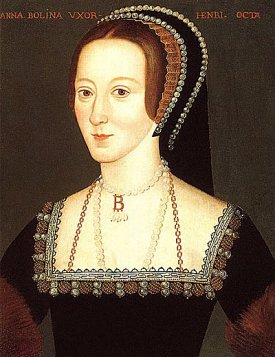
You are Anne Boleyn, second, and most famous, wife of Henry. You are firey, smart, confident, and witty. Though not notorious for your beauty, you have a prescense that sticks out in people's minds. You will stop at nothing to get what you want. Keep in mind, though, when you get it, you have to know how to keep it.
Now, I will try to phrase my words as diplomatically as possible. I will try to put my own personal prejudices aside, (remember, I like Gone With The Wind so that should reduce my credibility just a tad), and I will not give away plot to those who are in the middle of reading, or are planning to read it.
I realize that the Twilight craze is a little "so last month," with the release of the movie that did not meet its hyped expectations. It took me about a month, since I had school and what not, but I read all four books in this series. I wanted to get in on that craze and I wanted to find out for myself, "what's the big deal?"
My praises for Stephenie Meyer's series is that she is able to project the crystal-clear picture of a hormonal, post-adolescent girl grappling with normal teenage stuff and the rise of womanhood. This is why so many young girls can relate with the novel's main character, Bella Swan. The writing is convincing enough that you do go through the motions right along with Bella.
(Bella, played by Kristen Stewart in the film)
Meyer also works well with suspense, stringing the reader along with intrigue. No matter how boring her prose can become, something wills you to continue. Perhaps it is the seductiveness of vampires? :P
Oh, I slipped. Yes, I said it. Her prose is boring. Most of the four novels have been written predominantly with dialogue advancing the storyline, alongside Bella's inner reflections. This is not a bad thing, per se, but when we do go into Bella's narration and her reflections, the scene is static and unmoving. I often zone out, drift, even fall asleep when this happens. Not to mention, the content--what Bella is saying is usually some sort of insecure drivel, which goes back to my earlier point about Meyer's convincing handle of teenage feelings. Bella's thinking about this, feeing insecure about that, dreaming about Edward Cullen this...
(played by Cedric Diggory, I mean, Robert Pattinson in the film)
Bella is obsessed with Edward--no question about that. She constantly describes how beautiful he is, how his icy cold skin turns her on, how he smells like honey and lilac, and even his breath is the sweetest, most wondrous thing in the world...
That's fine, but we get it the first time, Bells. He's hot, you want him. Understood.
The relationship between Bella and Edward isn't that developed, though. It seems rather shallow and superficial, based on feelings, looks, and yes, hormones. Bella's freak-nasty. Her relationship with Jacob Black, her eventual best friend, is much more developed through the beginning of the series. I want to know why she's spouting out that she loves Edward so much, so early in the first book.
(Kind of a hot image, actually...)
Meyer's writing is definitely long-winded. Twilight is 500 pages long, and yet I still yearn for a stronger emotional attachment between Bella and Edward, that I'm just not getting. But anyway, I too, am long-winded, unfortunately. So if this post has done nothing but sallivate your thirst to read the series, watch the film, or made you very angry...great! Let's talk Twilight.
Yeah, I dropped off the map on here for a while...but for good reason. The last couple of weeks of the semester were pretty labor-intensive. But I'm finished now! I have only one semester left of college.
Next semester, I'll be in ENGL 412, which helps to produce the Northridge Review, a literary magazine, and ENGL 490, the senior seminar in narrative writing. I'm glad for the break--but there is that lingering thought in my mind that I want to go back to school, too. I somehow enjoy the work. :P
As technology and the means of production increase and evolve, modern society now has greater access to everything. From pornography to exclusive art galleries, grape juice to vintage wine and everything in between is available at our disposal. Directly due to the advancement in quicker communication and discoveries in scientific research, mass production enables us to have all the commodities we need. Does all this easy access come at a price? In exploring the novel, Fahrenheit 451, by Ray Bradbury, and other texts and films, it is apparent that having things quickly and easily affect the way people feel, act, and think.
First, how and when did the western world become so heavily based on the assembly line process and mass production? Henry Ford revolutionized this means of production for his line of automobiles in the early twentieth century (Batchelor). Ever since then, we have utilized this in America to produce the majority of our goods. Nowadays, we outsource many of the factory jobs to other countries. Generally, this cheap means of labor means that we, as consumers, pay less and are happy with a bargain. However, on the other side, the worker suffers. Unfair wages or long work days contribute to a worker’s overall dissatisfaction. An early example of this would be the Triangle Shirtwaist Factory incident, where the working women were locked in the building, and a large majority died tragically.
A stunning example in film of the effect that this type of labor has on people is seen in Fritz Lang’s masterpiece, Metropolis. In a clip from the film, we see the workers carrying on with their jobs—making repetitive movements and are almost robotic. Perhaps what Lang is trying to criticize here is the near-tyranny of capitalism and how greed can affect the average person. Also in this clip, the robotic and unchanging movements serve to show how this type of environment and lifestyle can deplete a sense of self, or a sense of humanity. These people have become shells; just human bodies that simply function.
In Bradbury’s Fahrenheit 451, we see exactly this—people are shallow shells that function only on a surface level. They have no substance, no drive, no ambition, no yearning. Intellectual pursuits are forbidden, even. The protagonist, Guy Montag, is a firefighter, whose job is to burn all the books that he and his fellow firefighters find (58). This is what firefighters do in the world of Fahrenheit 451. They are not the heroes people usually associate them as, but as mediators of the so-called peace and sanctity of the culture. Montag then meets people that change his mind about the life he’s living and the world around him. He starts questioning everything. He is having a personal quest to find the truth. It is interesting that he finds dissatisfaction with his life. Chief Beatty is Montag’s superior at the fire station, and he says bluntly:
People want to be happy, isn’t that right? Haven’t you heard it all your life? I want to be happy, people say. Well, aren’t they? Don’t we keep them moving, don’t we give them fun? That’s all we live for, isn’t it? For pleasure, for titillation? And you must admit our culture provides plenty of these. (59)
Essentially, Beatty means that the fireman’s job is mass production. Burn the books, abolish philosophy, complicated thought, and reason because it doesn’t make people happy. If one person knows more than the other, they are not on equal playing ground, which is discouraging for the lesser.
Mass production, in this case loosely defined as making something rapidly and efficiently for all to consume. Philosopher Theodor Adorno, comments about mass production in relation to art: “The stunting of the mass-media consumer’s powers of imagination and spontaneity does not have to be traced back to any psychological mechanisms; he must ascribe the loss of those attributes to the objective nature of the products themselves.” If we are given poor quality entertainment or taught with a lack of substance or intelligence, then our imagination and creativity suffer. In Fahrenheit 451, the mass production of happiness and equality tries to permeate in all aspects of life. People now want instant gratification. This comes in the form of abbreviated television shows, movies, known as “parlor” television or family (Bradbury 82) and pills for sleeping, waking up, and every ailment in between (Bradbury 43).
There is a memorable scene in the film version of Fahrenheit 451 where Montag’s wife, Linda (Mildred in the novel), overdoses on her pills. Montag is distressed and tries to call for emergency help. The emergency line answers nonchalantly, asking him what color the pills are. They come in simple colors like white, blue, and yellow. Then two technicians come to Montag’s house and pump her blood with a machine, which will revive her and they simply shrug it off as routine procedure. What is interesting is how simple the pills are—basic colors—and a doctor does not come to check on Linda. The technology is simultaneously advanced and primitive. Everything is done at a fast pace. Interestingly, why does Linda feel compelled to take so many pills if everyone’s lives are meant to be happy? This is far from a picture of happiness.
Book-burning is the cornerstone of Bradbury’s novel. To burn books is to burn thought, ideas, imagination, creativity, inequality, and suppress revolution. Beatty says that books encourage inequality because, “Bigger the population, the more minorities. Don’t step on the toes of the dog lovers, the cat lovers, doctors, lawyers, merchants, chiefs, Mormons, Baptists, Unitarians, second-generation Chinese, Swedes, Italians, Germans, Texans, Brooklynites Irishmen, people from Oregon or Mexico” (Bradbury 57). This is all in hope that equality will mean contentment for all. However, the scene where Montag and the firemen burn a woman with her books is an example of how much they affect people. She is so attached to her books; she is willing to die with them. She strikes the match herself and the entire house ignites around her. (Bradbury 36-40) The old woman finds her happiness, not in the parlor television screens, or in simple entertainment, but from her books. She rejects her own society. This is echoed here: “The culture industry did away with yesterday’s rubbish by its own perfection, and by forbidding and domesticating the amateurish, although it constantly allows gross blunders without which the standard of the exalted style cannot be perceived” (Adorno & Horkheimer). Therefore mass production borrows from its former elements and churns out low-quality results for all to consume. This explains the old woman’s attachment to her books, her need for something deeper and meaningful, and Montag’s disillusionment with society.
Something I have increasingly noticed in our society, when I observe my family and friends is that there is such a reliance on technology. We are a culture that feasts on gadgets that help to make our lives easier, for example the iPhone or the Blackberry. Time and time again, I have heard people say “what I wouldn’t give to have one of those iPhones right now…I’m so bored!” It makes me wonder, a little nostalgically, what did people do before iPhones and Blackberries? Why do people camp out overnight to buy the newest video game console? Why do people get trampled to death in Wal-Mart because of this overzealous fascination with material things? Is it the “stuff” that makes a person this way, or are we, as people, truly this greedy and lustful? Where does this drive to want more and more things come from--ourselves or what the media portrays? Companies produce to make money, as evidenced in the assembly line formation: fast, efficient, cost-effective. It is an interesting dynamic between producer and consumer, a continuing cycle.
Today, mass production is meant to deliver the things used every day to people in the fastest way possible. The assembly line and the quick communication are optimal for saving time and money. However, it is apparent that mass production of happiness or art, things that are abstract or ambiguous suffer from the exchange. Ray Bradbury’s novel, Fahrenheit 451, gives a glimpse into a society where everything is instant and devoid of thought and imagination. The philosophies of this world have good intentions: to create equality for all. However, equality does not automatically translate to happiness or satisfaction. Rather, the people are vapid, find nothing meaningful, and in the case of Montag, are on a search for fulfillment but never seems satisfied. One cannot produce results or happiness with the flick of a switch or by popping a pill. It comes from within—from a functioning mind.
WORKS CITED
Adorno, Theodor and Horkheimer, Max. “The Culture Industry: Enlightenment as Mass Deception.” Dialectic of Enlightenment, 1994. CSUN WebCT.
Batchelor, Ray. Henry Ford, Mass Production, Modernism, and Design. Manchester: Manchester University Press, 1994.
Bradbury, Ray. Fahrenheit 451. New York: Ballantine, 1953.
Fahrenheit 451. Dir. François Truffaut. Perfs. Julie Christie, Oskar Werner, Cyril Cusack. Universal Pictures, 1966.
Metropolis. Dir. Fritz Lang. Perfs. Alfred Abel, Brigitte Helm, Gustav Frölich, Rudolf Klein-Rogge. Paramount Pictures, 1927.